Hans Meyer
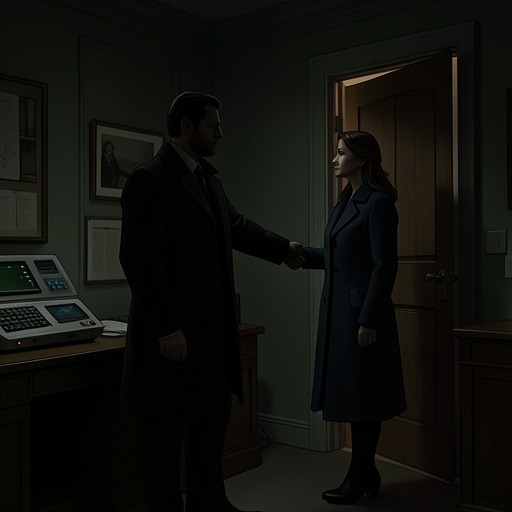
The Collini CaseHans Meyer is presented through two sharply different records: the familiar name of a businessman, and the name of a German officer associated with the wartime arrest and shooting of Fabrizio Collini’s father. The novel’s later trial makes that identity central to the meaning of Collini’s killing of Meyer, setting an act of personal revenge against the question of whether Meyer’s conduct was lawful at the time.
Identity and Name
Meyer’s mother was French, and she named him Jean-Baptiste, after John the Baptist. He did not use that longer name in ordinary life. As with other men of his generation whose names were shortened, Johannes became Hans; he was known to everyone as Hans Meyer. Even his business cards carried the plain, shortened name. The contrast matters: the account gives his name a personal history, but emphasizes how thoroughly the everyday version became his public identity.
That familiar name later appears in a very different context. In the courtroom, Johanna Meyer describes the defendant as the murderer of her grandfather, identifying Meyer as the family member at the center of the case. The novel thus first makes his significance legible through a relationship—grandfather—and then, through the evidence about his wartime role, complicates the image of a private family loss.
Wartime Role in Italy
The account of Fabrizio Collini’s family reaches Meyer through a paper read aloud by Uncle Mauro. It states that the German Security Service detachment posted in Milan had arrested Fabrizio’s father by order, and identifies the German now in charge of the prisoners as SS-Sturmbannführer Hans Meyer. The name that had appeared on business cards is thereby placed in an official chain of command: Meyer is not introduced merely as an individual known to the family, but as an officer responsible for prisoners after their arrest.
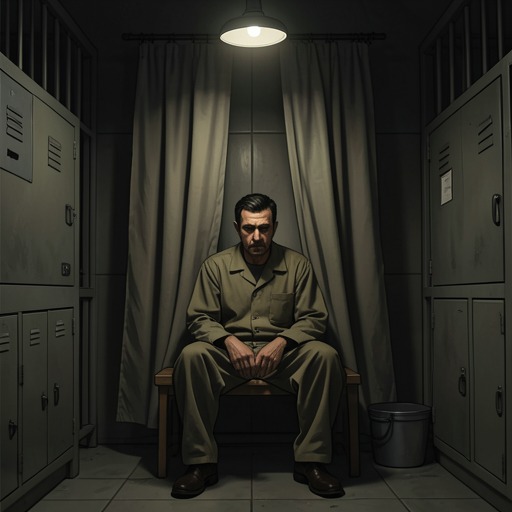
A later scene places Meyer at a prison during the movement of prisoners. They are taken to a truck in a brightly lit yard, guarded by armed marines; the account says that no one resists and no orders are shouted. Meyer gets into the back of a jeep at the prison door. The interpreter does not understand everything said there, but hears Meyer refer to Hitler’s orders, General Kesselring, and a reprisal ratio of ten dead prisoners for each dead soldier. The limits of what the interpreter understands are significant: the scene connects Meyer to the policy being invoked without presenting every exchange as fully known or explained.
The Shooting and the Later Trial
In court, Richard Mattinger states that Fabrizio Collini’s father was shot on Hans Meyer’s orders. He links that earlier act to Collini’s later killing of Meyer, describing it as vengeance carried out fifty-seven years afterward. This account gives the case its personal chronology: a father’s death, followed decades later by the son’s act against the officer held responsible. It establishes the relationship between the two deaths without making Collini’s motive, by itself, a complete answer to the legal question.
Mattinger’s argument turns on the law in force when the shooting occurred. If Meyer’s order was legally permissible under that law, Mattinger says, the motive for Collini’s killing changes its appearance: Collini would have killed a man who had done what the law then considered correct. The formulation places Meyer at the intersection of legal authority and moral judgment. It does not erase the consequence of his order for Fabrizio’s family; instead, it shows why establishing the lawfulness of the act becomes decisive to how the later killing is understood.
Narrative Significance
Meyer is important less through a sustained account of his private life than through the different meanings attached to his name. To his granddaughter, he is the murdered grandfather. In the wartime account, he is an officer named as responsible for prisoners and as the man who ordered the shooting of Collini’s father. In the trial, those identities cannot simply be separated: the family’s description of vengeance meets an argument about the legal status of the original act.
The novel also distinguishes what is stated from what remains bounded by the record. The paper read by Uncle Mauro identifies Meyer’s position; the prison scene conveys only what the interpreter can understand; and Mattinger presents the shooting and its legal implications as part of his courtroom argument. Together, these fragments make Meyer’s role consequential without supplying a full biography or an account of his thoughts. His familiar, shortened name becomes the point at which official authority, a family’s long memory, and the law’s judgment of past conduct converge.